
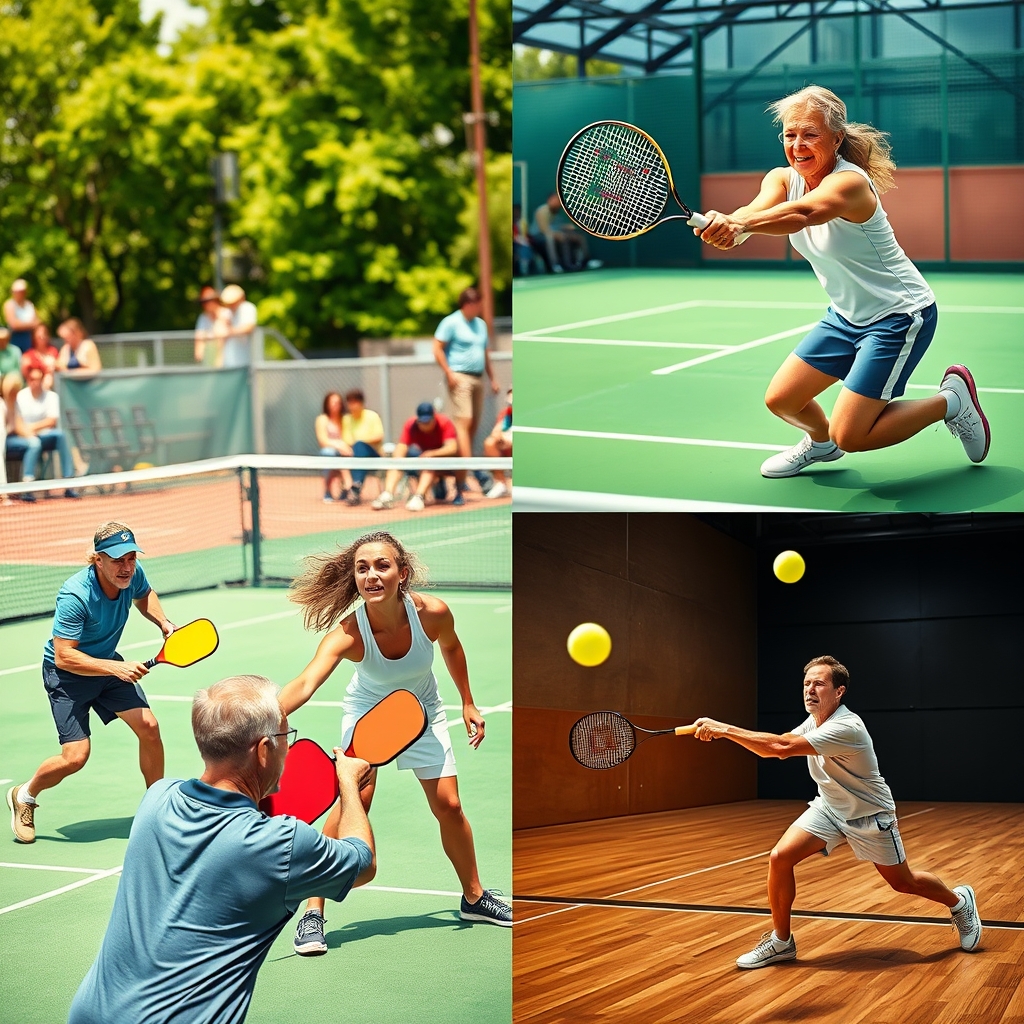
Racket sports have surged in popularity, offering dynamic ways to stay active while catering to diverse skill levels and preferences. Whether you’re drawn to the fast-paced intensity of squash, the strategic rallies of tennis, the accessibility of pickleball, or the agility of badminton, each sport delivers unique benefits and challenges. Recent trends reveal a growing interest in these activities, with participation rates climbing across all age groups. This guide explores the key differences, health advantages, and rising popularity of tennis, pickleball, badminton, and squash to help you choose the best fit for your lifestyle.
Why Are Racket Sports Gaining Popularity?
Racket sports have seen a remarkable rise in engagement, driven by their adaptability and social appeal. According to recent data, pickleball participation in the U.S. alone has grown by over 150% in the last three years, making it the fastest-growing sport in the country. Tennis and badminton have also experienced steady increases, with tennis courts and badminton clubs reporting higher membership numbers. Squash, though niche, has cultivated a dedicated following due to its high-intensity workouts and competitive nature.
Furthermore, these sports are accessible to all ages, from children learning coordination to seniors seeking low-impact exercise. The social aspect plays a significant role, as doubles matches in tennis, pickleball, and badminton foster community and camaraderie. Additionally, the minimal equipment required for sports like pickleball and badminton makes them budget-friendly options for beginners.
What Are the Key Differences Between Tennis, Pickleball, Badminton, and Squash?
While all four sports involve rackets and a ball or shuttlecock, their rules, court sizes, and gameplay dynamics vary significantly. Tennis is played on a large court, either singles or doubles, with a felt-covered ball and a focus on powerful serves and groundstrokes. A standard tennis match can last several hours, demanding endurance and strategic play.
Pickleball, on the other hand, is played on a smaller court resembling a badminton court, with a plastic ball and solid paddles. The game emphasizes quick reflexes and precise shot placement, making it easier for beginners to pick up. Badminton uses a lightweight shuttlecock and is typically played indoors, requiring agility and rapid hand-eye coordination. Squash, played in an enclosed court, involves hitting a rubber ball against walls, creating a fast-paced, high-energy experience.
Which Racket Sport Offers the Best Workout?
The health benefits of racket sports are undeniable, but each offers distinct advantages. Tennis provides a full-body workout, improving cardiovascular health, strength, and flexibility. A 155-pound person can burn up to 600 calories per hour during a competitive match. Pickleball, while less intense, still delivers a solid workout, with players burning around 400 calories per hour due to its constant movement and quick bursts of energy.
Badminton is exceptional for improving reflexes and agility, with players covering short distances at high speeds. It also enhances hand-eye coordination and core strength. Squash, known for its high-intensity rallies, is one of the most effective calorie-burning sports, with players expending up to 750 calories per hour. The enclosed court forces continuous movement, making it a top choice for those seeking an intense cardio session.
How Do Court Sizes and Equipment Impact Gameplay?
Court dimensions and equipment play a crucial role in shaping each sport’s unique experience. Tennis courts are the largest, measuring 78 feet long and 27 feet wide for singles matches, requiring players to cover significant ground. Pickleball courts are smaller, at 44 feet long and 20 feet wide, making them ideal for quick, close-quarters play. Badminton courts are similar in size to pickleball courts but are divided by a net and played indoors to avoid wind interference.
Squash courts are the most compact, measuring 32 feet long and 21 feet wide, with walls used as part of the playing surface. Equipment also varies: tennis rackets are larger and strung for power, while pickleball paddles are solid and shorter. Badminton rackets are lightweight and designed for speed, and squash rackets are smaller with a teardrop shape to handle the ball’s high velocity.
What Are the Social and Competitive Aspects of These Sports?
Racket sports excel in fostering social connections and competitive opportunities. Tennis clubs and leagues provide structured environments for players to improve their skills and compete in tournaments. Pickleball, with its easy-to-learn rules, has become a social phenomenon, with communities organizing round-robin events and casual meetups. Badminton is popular in schools and recreational centers, offering a fun way to engage with friends and family.
Squash, though less mainstream, has a passionate competitive scene, with professional tours and local clubs hosting regular matches. The sport’s fast pace and strategic depth attract players seeking a challenge. In addition, all four sports can be played in doubles formats, enhancing their social appeal and making them ideal for group activities.
Which Sport Is Easiest for Beginners to Learn?
For newcomers, pickleball stands out as the most beginner-friendly option. Its smaller court and slower-paced ball make it easier to pick up basic techniques. The rules are straightforward, and the learning curve is gentle, allowing players to enjoy the game quickly. Badminton is also accessible, with lightweight equipment and simple scoring, though mastering advanced shots takes practice.
Tennis requires more time to develop skills like serving and volleying, but its widespread availability makes it a popular choice. Squash, with its enclosed court and fast ball speed, can be challenging for beginners, but its unique gameplay offers a rewarding experience for those willing to invest time in learning the fundamentals.
FAQ: Common Questions About Racket Sports
What Is the Most Popular Racket Sport in the U.S. Right Now?
Pickleball is currently the most popular racket sport in the U.S., with participation rates increasing by 158% over the past three years. Its accessibility, social nature, and adaptability for all ages have contributed to its rapid growth.
How Much Does It Cost to Start Playing These Sports?
Costs vary by sport, but pickleball is the most budget-friendly, with starter paddles available for as little as $30. Tennis rackets can range from $50 to $300, while badminton and squash rackets typically start around $40. Court fees and memberships may add to the expense, but many public parks offer free or low-cost access.
Can Racket Sports Help with Weight Loss?
Absolutely. Racket sports are excellent for weight loss due to their high calorie-burning potential. Squash leads the pack, with players burning up to 750 calories per hour, followed by tennis at 600 calories. Pickleball and badminton also contribute to weight loss, with calorie expenditures of 400 and 450 per hour, respectively.
Choosing the Right Racket Sport for You
With so many options available, selecting the right racket sport depends on your fitness goals, skill level, and personal preferences. Tennis offers a classic, endurance-based experience, while pickleball provides a fun, social alternative. Badminton is perfect for those seeking agility and speed, and squash delivers an intense, high-energy workout. No matter which you choose, each sport promises a rewarding way to stay active and engaged.
As the popularity of tennis, pickleball, badminton, and squash continues to rise, there’s never been a better time to grab a racket and join the action. Whether you’re looking for competition, fitness, or fun, these sports offer something for everyone.